A project that demonstrates practical implementation capability

S&OP Operations Platform - data, processes and management decisions in one place

This platform is designed to support sales and operations work: from customer records and field visits to surveys, market data, KPI tracking, management reports and S&OP cycles. It shows how fragmented operational work can be organised into one structured tool for teams and managers.

Less manual work Stronger data control Faster reporting One consistent workflow Decision support based on data

Executive summary

A platform for organisations that need more control over execution, data quality and reporting.

This concept illustrates how one application can support everyday work across sales and operations while also giving managers a clearer view of field activity, planning, KPI performance and reporting. The scope covers customer handling, visits, surveys, data imports, market indicators, management reporting and S&OP routines.

The main business value comes from combining three areas: field data, a structured operating process and a management reporting layer. That combination can reduce reliance on spreadsheets, improve information quality control and shorten the path from raw input to an actionable management view.

See which processes can be improved

The challenge this project addresses

Typical friction points in organisations working with visits, field data and recurring reports.

Fragmented information

Customer data, visit notes, market inputs and KPI figures often end up in separate sheets, emails and documents, which makes control difficult.

Manual reporting effort

Teams spend time rewriting or consolidating data, while managers receive updates late or in inconsistent formats.

No shared operating process

Without one common tool, it is harder to track visit status, survey progress, sales activity and management review cycles.

Slower decisions

When data is incomplete or difficult to compare, operational and sales decisions tend to happen later than they should.

From challenge to process support

How the project capabilities translate into business value

Challenge
Support built into the platform
Management effect
Manual collection of field data
Mobile forms, operational surveys and configurable follow-up questionnaires.
Teams capture information in one comparable format, and managers receive usable inputs faster.
Limited control over field visits
Visit calendar, statuses, completion and cancellation flows, plus web and mobile access.
It becomes easier to monitor plan execution and review field activity in context.
Market data living outside the system
Imports for market datasets and dictionaries, market segments, KPI structures and estimates.
Reporting can rely on a shared source of data instead of manually assembled summaries.
Management reviews are hard to run consistently
S&OP modules, KPI tracking, action schedules, files, reports and structured meeting summaries.
Review meetings can follow one process and use better organised data.

Key capabilities

Not a list of technologies, but practical tools for daily work.

Central customer base

The platform can store companies, contacts, regions and segments so the team works from one operational source of information.

Value: less data chaos and smoother customer handling.

Technical proof: the repository includes customer, contact, region and list-view modules.

Visit planning and control

The calendar helps plan meetings, reschedule them, assign statuses and record visit outcomes.

Value: better transparency of field work and faster managerial response.

Technical proof: calendar views, JSON endpoints and FullCalendar templates are visible in the codebase.

Mobile data capture

A field user can enter customer information, survey answers, potential, stock observations and notes during the visit itself.

Value: data is created closer to the source and closer to the actual moment of work.

Technical proof: a separate mobile module, plus forms and templates for visits and surveys, is present in the repository.

KPI and reporting layer

The system supports indicators, values, forecasts and charts that help compare results and follow trends over time.

Value: a shorter route from data to management discussion.

Technical proof: KPI models, chart views and reporting templates are visible in the project.

Market data and imports

Imports can feed the platform with information from files, including customers, staff, business categories, segments and market data.

Value: less manual rewriting and better consistency of input data.

Technical proof: import commands and import forms are present in the repository.

S&OP process support

The platform supports recurring meetings, thematic blocks, KPI review, files, reports, action schedules and meeting summaries.

Value: management reviews can become more repeatable and more data-driven.

Technical proof: the codebase includes modules for meetings, content blocks, reports and printouts.

Value for managers

More control without adding more manual administration.

Managers get a working view of the process: who is visiting customers, what data is being collected, which KPI areas need attention and what decisions should follow from the reports.

Faster access to information

Data is stored in the system and can be presented in operational views and management reports.

Better repeatability

Visits, surveys and S&OP routines follow one shared structure instead of depending only on individual habits.

Lower error exposure

Forms, statuses and imports help reduce the risk of incomplete or inconsistent information.

Easier scaling

The platform can support segments, regions, user roles and multiple data types as the process grows.

Value for the organisation

Organisational impact

Sales

Better preparation for customer conversations and stronger visibility of potential.

Operations

A more consistent process for visits, surveys, statuses and reporting.

Reporting

Data can be assembled faster without rebuilding spreadsheets from scratch every time.

Knowledge retention

The history of visits, customers, surveys and indicators stays inside the system.

Why this project demonstrates implementation competence

This is not just an idea. It is a working system describing a real business process.

Process understanding

The project covers field work, customer data, surveys, reports and management cycles, which shows process-oriented thinking.

Work with data

Data models, imports, KPI structures and market analysis modules show the ability to organise complex information.

Tool design for real users

The application includes web and mobile views, forms and reports, which are necessary for day-to-day operational use.

Automation of repeatable work

Imports, dynamic surveys and reports help reduce repetitive manual effort.

Control mindset

Roles, authentication, regions, statuses and activity history support access control and accountability.

Room for further growth

The scope creates a solid base for additional dashboards, integrations, alerts and process extensions.

Example use cases

Where a similar approach can create value

Management dashboard

For whom: executives, owners and department heads.

Challenge: key data is spread across multiple places.

Effect: one management view of the most important indicators.

Field sales support system

For whom: trading and distribution companies.

Challenge: visits and notes are difficult to control consistently.

Effect: plans, statuses and reports available in one place.

Reporting automation

For whom: operations and administration teams.

Challenge: recurring summaries consume too much time.

Effect: less manual work and fewer avoidable mistakes.

Integration of data from several sources

For whom: companies using spreadsheets, CRM and industry systems.

Challenge: data does not create one coherent picture.

Effect: a more structured knowledge base for decisions.

Process control panel

For whom: operations, logistics, service and back-office teams.

Challenge: it is difficult to see the current stage of each task.

Effect: statuses, ownership and activity history in one workflow.

Data / AI extension path

For whom: companies handling large volumes of operational data.

Challenge: data is collected but underused.

Effect: a possible path toward scoring, alerts and recommendations. This is a development direction, not a confirmed feature in this repository.

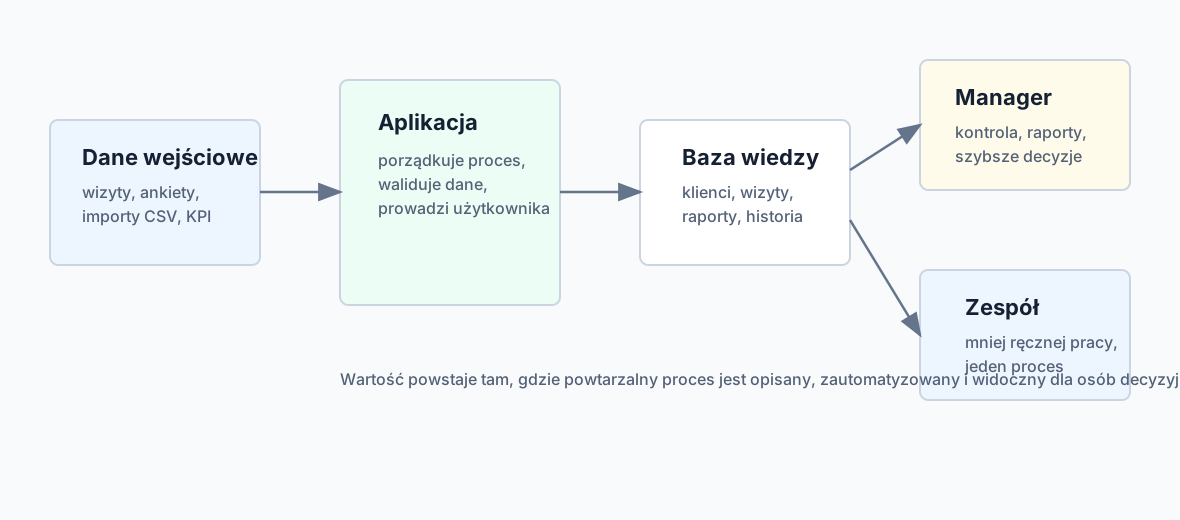
How the platform works - manager view

A simple flow from data collection to decisions

Data enters the platform

From visits, mobile forms, surveys, CSV imports and KPI inputs.

The platform organises it

Data is linked to customers, segments, visits, KPI areas and operating processes.

Users execute the process

They plan visits, complete surveys, import data or prepare review meetings.

Managers see the result

Reports, KPI views, statuses and summaries create a shared management picture.

The organisation decides

Based on structured information rather than isolated notes.

System workflow diagram

Interface visuals may contain Polish labels because they come from the original working prototype.

Architecture in plain language

Users do not need to see the technology. They need to see the process, the data and the outcome.

User panel and mobile access

The working layer for customers, visits, surveys, reports, KPI monitoring and S&OP activity.

Data layer

A shared source of information about customers, visits, surveys and indicators.

Imports and integrations

The way the platform receives data from files and can connect to external sources.

Reports and decisions

Views, charts and summaries designed to support management discussions.

Automation, analytics and AI potential

Current value: data and reporting automation. Future potential: AI on top of structured operational data.

visible in the codebase

What is already visible

CSV imports, dynamic surveys, CSV reports, KPI structures, KPI value forecasting, market-data aggregation, charts, barometer logic and automatic generation of current S&OP process elements.

possible development direction

What could be added later

KPI deviation alerts, customer scoring, sales action recommendations, anomaly detection, automatic visit summaries and demand prediction. These are development ideas, not confirmed built-in functions of the current repository.

Why this is worth discussing

If a process is manual, fragmented or hard to control, a similar approach may help turn it into a practical operating system.

This concept demonstrates the ability to connect business understanding with technology work: structuring a process, organising data, building a user panel and preparing reports that support management decisions. It is a solid starting point for discussing operational planning support in another organisation.

A natural next step

A similar platform can be discussed when a company needs better control over recurring processes, scattered data, field activity or management reporting.

Free AI diagnosis

Which companies can benefit most

The strongest fit is for organisations that already have a repeatable process, operational data and recurring work.

Trading companies

Visits, customer records, sales potential and field reporting.

Operations teams

Statuses, tasks, controls, reports and accountability.

Administrative teams

Recurring forms, structured data and information flows.

SMEs

Process support without having to build a large IT department from day one.

Possible development directions

A roadmap as a recommendation, not a list of current functions

recommendation

Management dashboards

Views for leadership, sales and operations focused on the most relevant indicators.

recommendation

Automatic alerts

Notifications about missing data, KPI deviations and overdue actions.

recommendation

System integrations

CRM, ERP, files, APIs and reporting tools as additional data sources.

recommendation

Approval workflow

Approval paths, ownership and history of changes.

recommendation

Data quality monitoring

Detection of missing records, duplicates and inconsistencies.

recommendation

AI modules

Summaries, classification, scoring and recommendations built on structured data.

recommendation

Exports and reporting packs

Recurring reports, packaged datasets and role-specific views.

recommendation

SaaS or dedicated deployment

A delivery model adjusted to scale, security needs and budget.

Summary

This S&OP management platform shows how a practical business tool can emerge from a strong understanding of process and data.

The project demonstrates the ability to build tools that organise everyday work, reduce repetitive manual steps, support reporting and give managers a clearer operating view. It is not a presentation of technology for its own sake, but evidence that technology can be shaped into practical operational support.

Professional CTA

If your company has manual processes, scattered data or recurring tasks that are difficult to control, a similar approach may help build a practical tool aligned with the real way the organisation works.

Describe a process worth organising

Project type and related services

A concept from the operations and process-management area

The project organises field data, KPI tracking, visits, reports, statuses and management cycles, showing the shift from fragmented spreadsheets to one structured workflow.

Describe a similar process

Appendix: basis of the analysis

Technical credibility points without turning the presentation into full documentation.

confirmed in code

Main modules

Customers, visits, mobile flows, operational surveys, KPI, market data, S&OP, action schedules, barometer logic, deduplication, imports and files.

interpretation

Business conclusions

Time savings, stronger process control and reduced error exposure are inferred from the visible functions and still need validation in a specific implementation.

needs verification

Open areas

No README or dependency file, no confirmed automated tests, database configuration outside the repository and Celery without discovered tasks.

Reviewed areaWhat it confirms
Application configurationA web application with authentication, forms, file handling and core system settings.
User layerThe scope of web and mobile processes, calendar work, KPI handling, market data, S&OP, surveys and reports.
Data layerStructures covering customers, visits, surveys, KPI, market data, S&OP, action schedules, barometer logic and deduplication.
Forms and viewsUser interface components, forms and both web and mobile views.
Imports and dictionariesFeeding the platform with file-based information and business dictionaries.
FrontendInterface elements used for tables, calendars and mobile work.